The Google Maps local pack — the three business listings that appear at the top of local search results — drives an enormous share of leads for service businesses. According to Google, businesses appearing in the local pack get 42% of clicks on local search results pages. Here is exactly how to get your business there.
Optimize Your Google Business Profile Completely
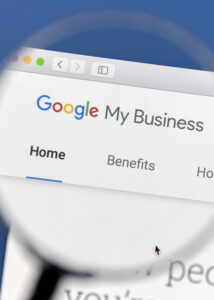
Your Google Business Profile is the primary ranking asset for Google Maps, and most businesses leave it half-finished. Full optimization means: correct primary and secondary categories, complete service list with descriptions, business description with naturally included keywords, hours including holiday hours, website URL, phone number, and a minimum of 20 high-quality photos.
The primary category is the single most important ranking signal in your GBP. Choose the most specific category that accurately describes your main service. If you are an HVAC contractor, choose “HVAC Contractor” — not “Contractor” or “Home Services.” Google uses this category to match your listing to relevant search queries. We review this as the first step in every local SEO audit we run.
Build a Review Acquisition System
Review velocity — how consistently new reviews come in — is a direct ranking factor. A business with 8 new reviews in the last 30 days will outrank a business with 200 total reviews and none in the last 6 months in most markets. According to Moz’s Local Search Ranking Factors survey, reviews are the second most important factor in local pack rankings after Google Business Profile signals.
Build a system, not a one-time push. After every completed job, send a text message with a direct Google review link. Automate this through your CRM. Make it a team habit. A steady stream of 3–5 new reviews per month compounds over time into a significant competitive advantage. Respond to every review within 48 hours — response rate is also a ranking signal.
Fix Your Local Citation Consistency
Citations are mentions of your business name, address, and phone number (NAP) across the web — Yelp, Yellow Pages, Facebook, Apple Maps, and dozens of other directories. Inconsistencies in your NAP data across these sources create confusion for Google’s verification system, which suppresses your local pack visibility.
Audit your NAP on the top 20 local directories. Every listing should use the exact same business name, address format, and phone number as your GBP. Tools like Moz Local or BrightLocal can automate this. The fix is not glamorous, but citation consistency is a foundational local ranking requirement that many businesses ignore.
Build Location Relevance Through Your Website
Your website is a supporting signal for your GBP rankings. Pages that mention your city and service area, embed a Google Map, include your local phone number in text (not just as an image), and contain your NAP in the footer all contribute to local relevance signals. Create individual service-area pages for each city you serve — a dedicated page for “HVAC Repair San Diego” and “HVAC Repair Chula Vista” gives you ranking opportunities in both.
Schema markup is also critical: LocalBusiness schema on your homepage and service pages tells Google explicitly what type of business you are, where you are located, and what you offer. This is standard practice in our builds but something 80% of small business sites are missing.
Earn Local Backlinks
Links from locally relevant websites — local chambers of commerce, local news outlets, partner businesses in your area — send a strong geographic relevance signal to Google. You do not need many; quality matters more than quantity in local link building. Five links from locally relevant sites often do more for local pack rankings than 50 links from irrelevant national sites.
Start with: your local chamber of commerce directory, your local Better Business Bureau listing, any industry associations in your market, and vendor or partner businesses who can reference your company. These are achievable links for any service business and have an outsized impact on local rankings. Get a competitive analysis to see exactly what links your top-ranking competitors have.
Frequently Asked Questions
How long does it take to rank in Google Maps?
For a well-optimized Google Business Profile in a moderately competitive local market, expect to see movement in the local pack within 30–90 days. Full top-3 ranking for primary keywords typically takes 3–6 months of consistent optimization. Highly competitive markets (personal injury attorneys, real estate agents) may take 6–12 months to break into the top 3.
Does my website affect my Google Maps ranking?
Yes, significantly. Your website is a trust and relevance signal for your GBP. Sites with proper LocalBusiness schema, consistent NAP in the footer, location-specific content, and strong domain authority contribute to higher local pack rankings. Google cross-references your GBP with your website to verify business legitimacy and determine service relevance.
How many Google reviews do I need to rank in the local pack?
There is no minimum threshold — but review quantity, recency, and rating all matter. In most small to mid-sized markets, 25–50 reviews with a 4.5+ average rating and consistent new reviews coming in every month is enough to compete in the top 3. In highly competitive markets like major metro areas, 100+ reviews with strong velocity may be required.
Why does my competitor rank higher in Google Maps even though I have more reviews?
Reviews are one of several ranking factors. Your competitor may have stronger GBP optimization (better categories, more photos, more posts), more consistent citation data, stronger website authority, or more backlinks from locally relevant sites. Run a side-by-side comparison of all these factors — the ranking gap is almost always explainable by one or two specific deficiencies.
Do Google Posts help with local pack rankings?
Google Posts contribute to GBP engagement signals, which Google uses as a secondary ranking factor. More importantly, posts keep your profile active and fresh — Google favors active, recently updated profiles over dormant ones. Posting once per week about promotions, services, or business updates is a simple habit that supports both rankings and click-through rate from your listing.
Can I rank in Google Maps without a physical address?
Yes — as a service-area business. Configure your GBP as a service-area business, define your service areas by city or zip code, and hide your address. Service-area businesses can rank in the local pack for their defined areas. Your ranking strength is generally strongest near your registered address and diminishes with distance, but you can appear across a broad service area with proper optimization.
Check if competitors are outranking you — Get your competitive analysis →